Run your institution as an intelligence.
Governed AI that rebuilds a credit union around the flow of information. The system holds the context, your people hold the judgment, and every agent action is keyed, logged, and killable.
Start with the work
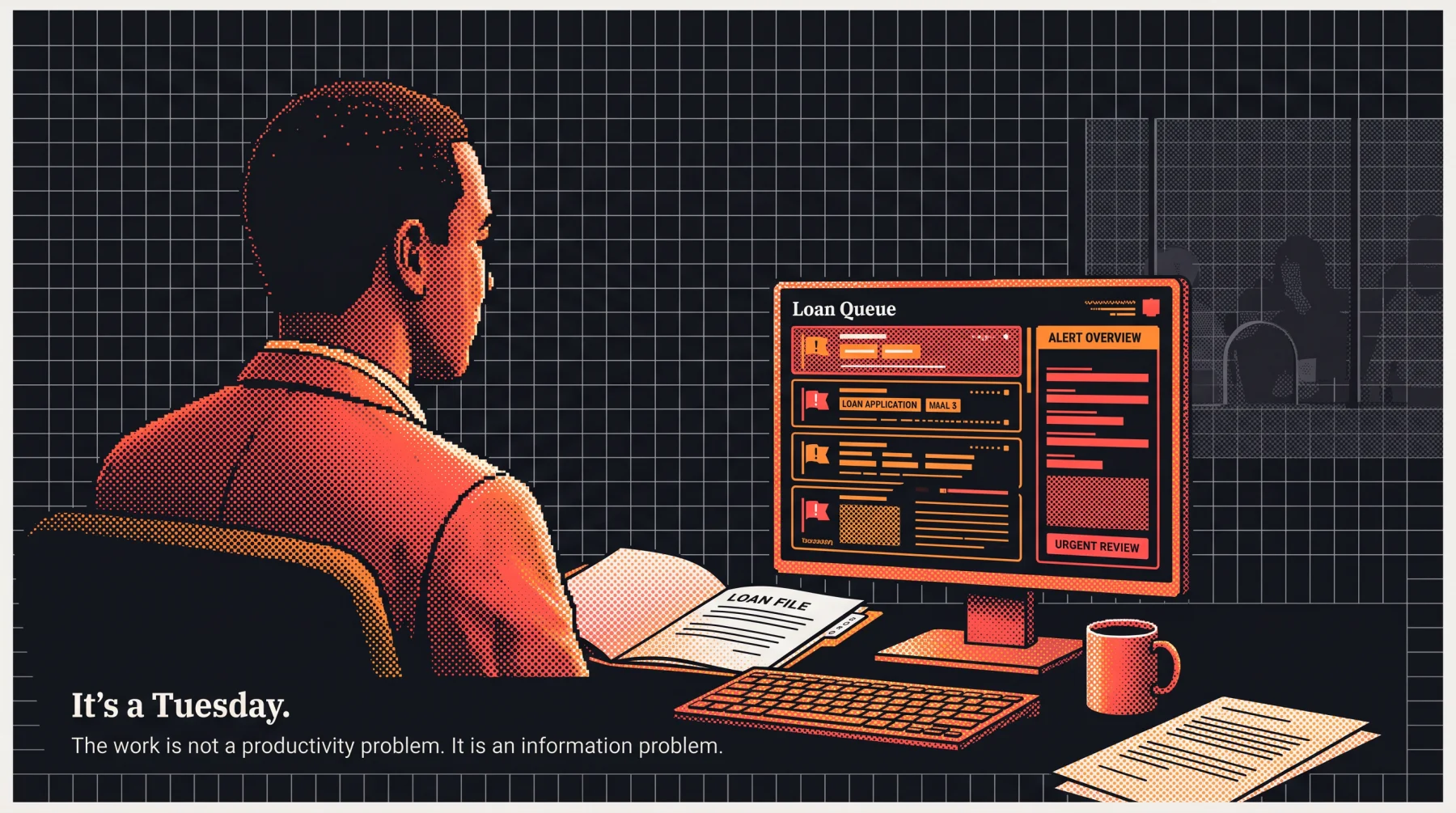
A member calls, an alert fires, a loan file needs a decision. The answer exists. It is just scattered across the core, the queues, and three people's heads, and today your staff carry it there by hand.
Find your way in
The thesis, and the four things a governed AI company produces.
Governance-first: keys, kill-switch, and an audit built to be examined.
The SDK, the API, the harness, and the primitives our Runners run on.
Four things, not a roadmap
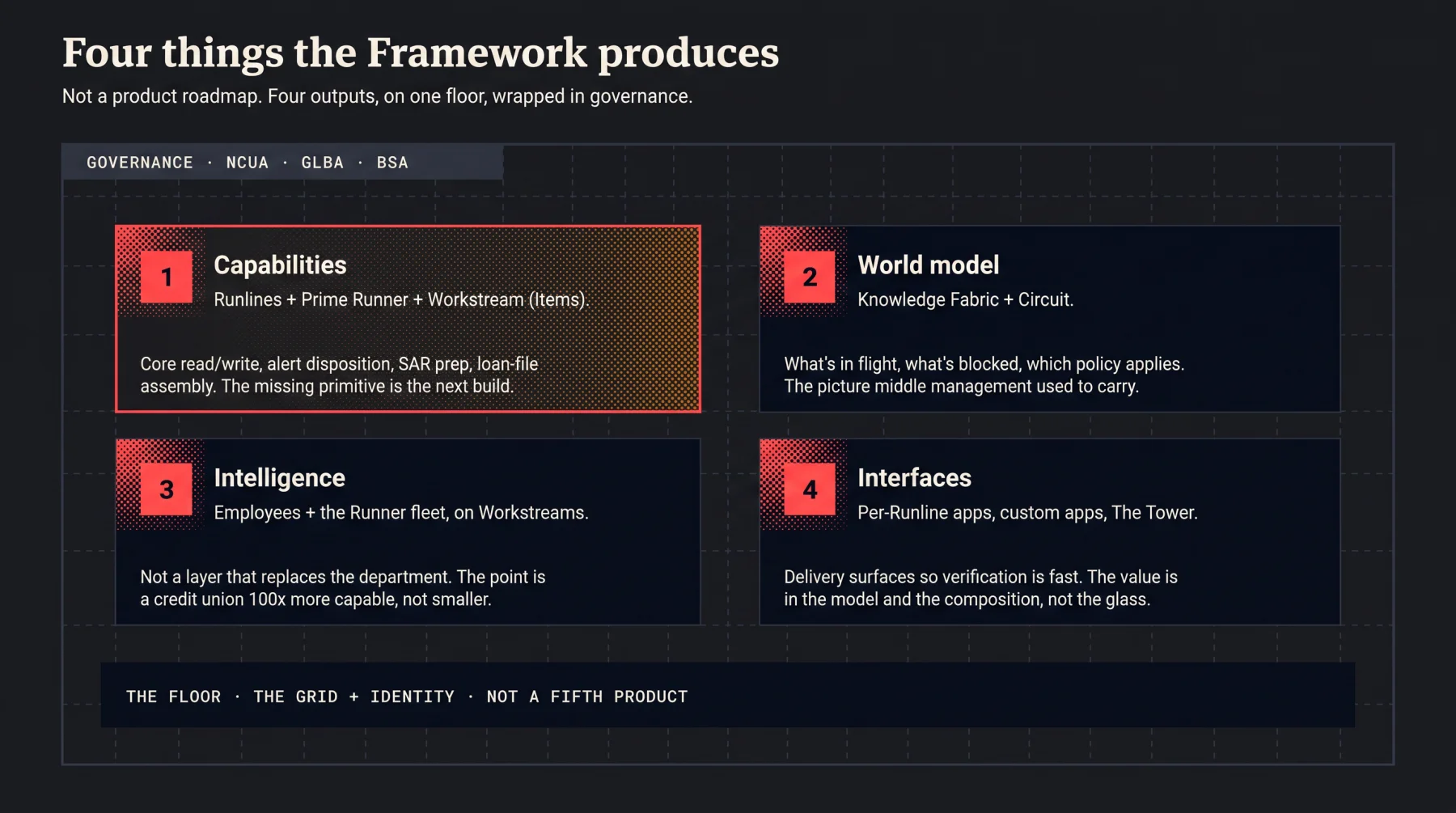
A company organized as an intelligence does not ship a product roadmap. It produces four things, inside NCUA, GLBA, and BSA: capabilities, a world model, an intelligence layer, and the interfaces on top. When a Runner cannot compose a solution, the missing primitive is the next build.
Human oversight, enforced by the architecture
Not by policy, by the Grid. Every agent action passes through one control plane before it ever reaches a core.
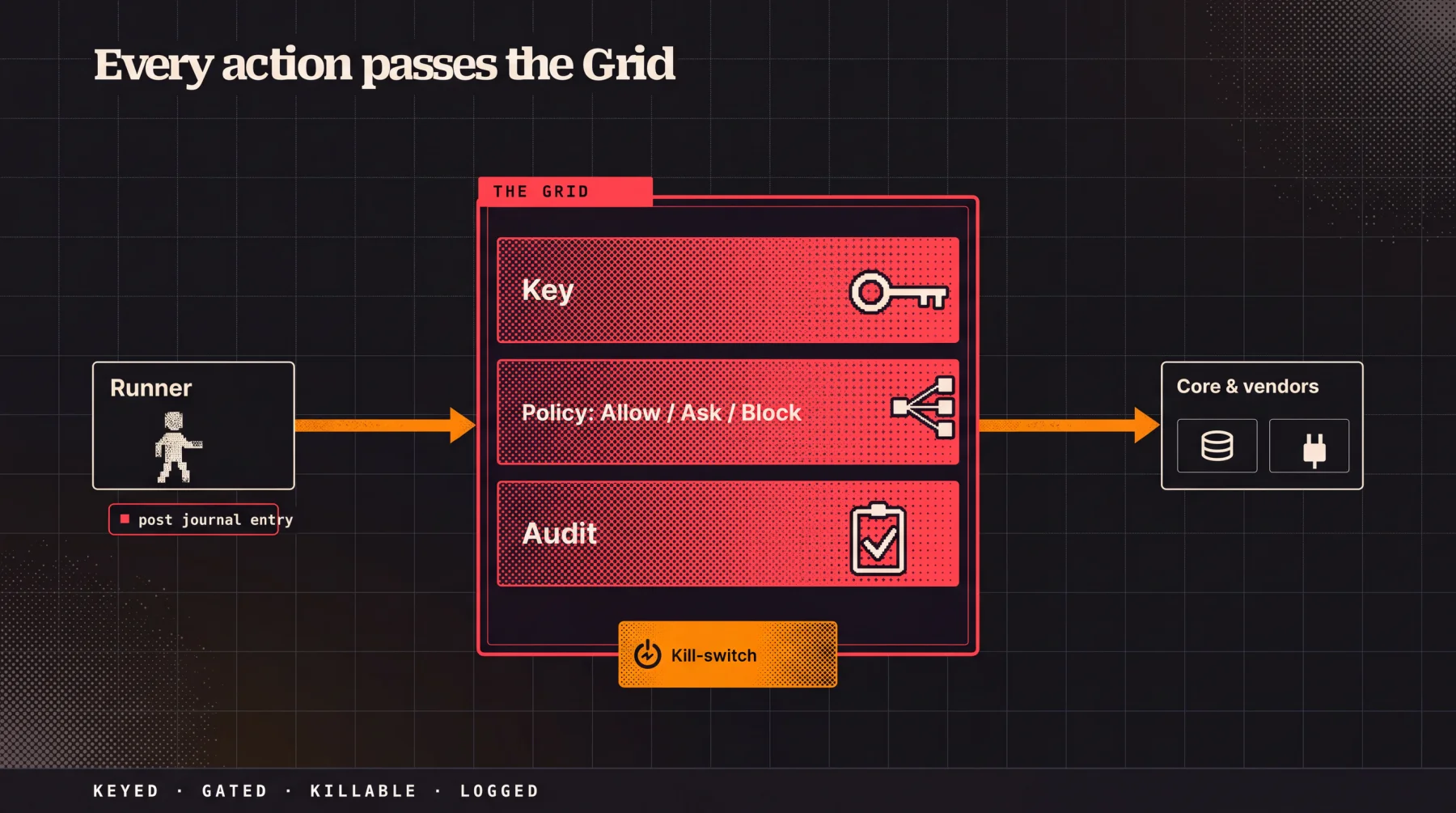
- Kill-switchStop any agent, sub-100ms, in your hands.
- AuditAppend-only, hashed, examiner-ready, five-year.
- KeysScoped per vendor and per agent, through the Grid.
- GatesHuman sign-off where a mistake is expensive.
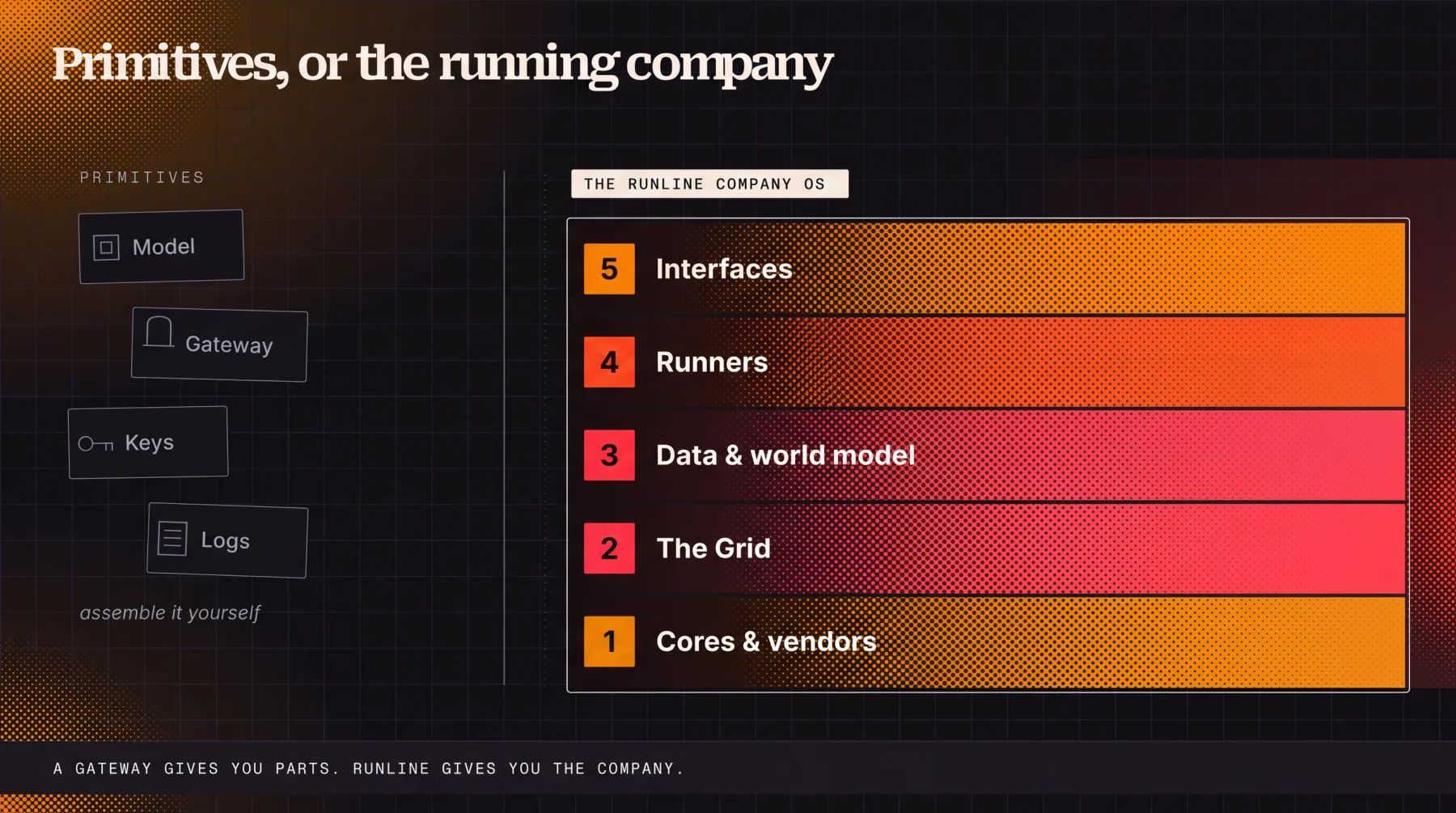
Not a gateway. A Company OS.
Horizontal tools hand you a control plane and a catalog, then leave the credit union to assemble the rest. Runline ships the whole stack, cores to interfaces, tuned to your world and already running.
Explore the platform
Start from the topThe thesis, the four things you produce, and how work should feel when the system holds the context and people hold the judgment.
Read the overview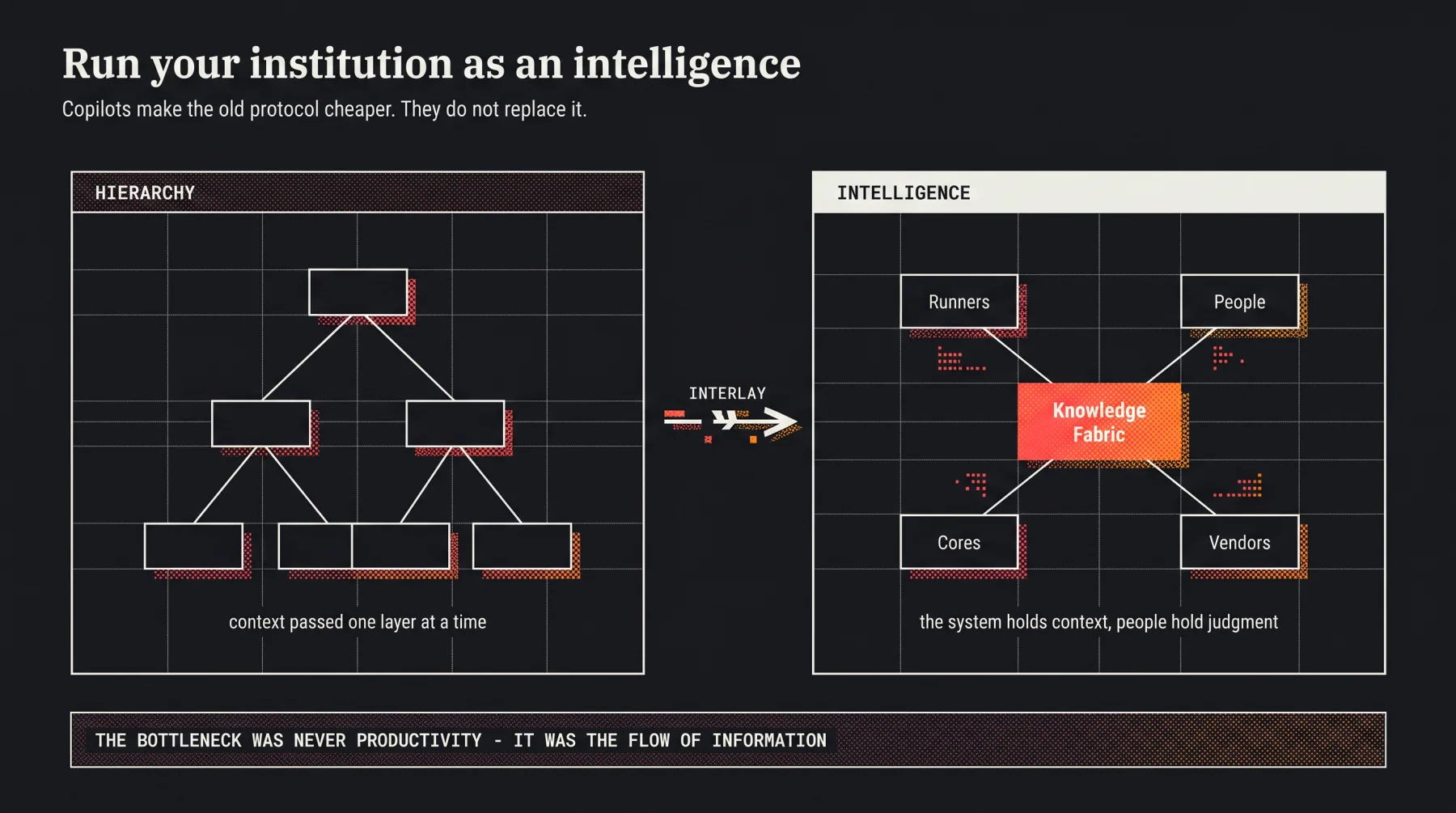
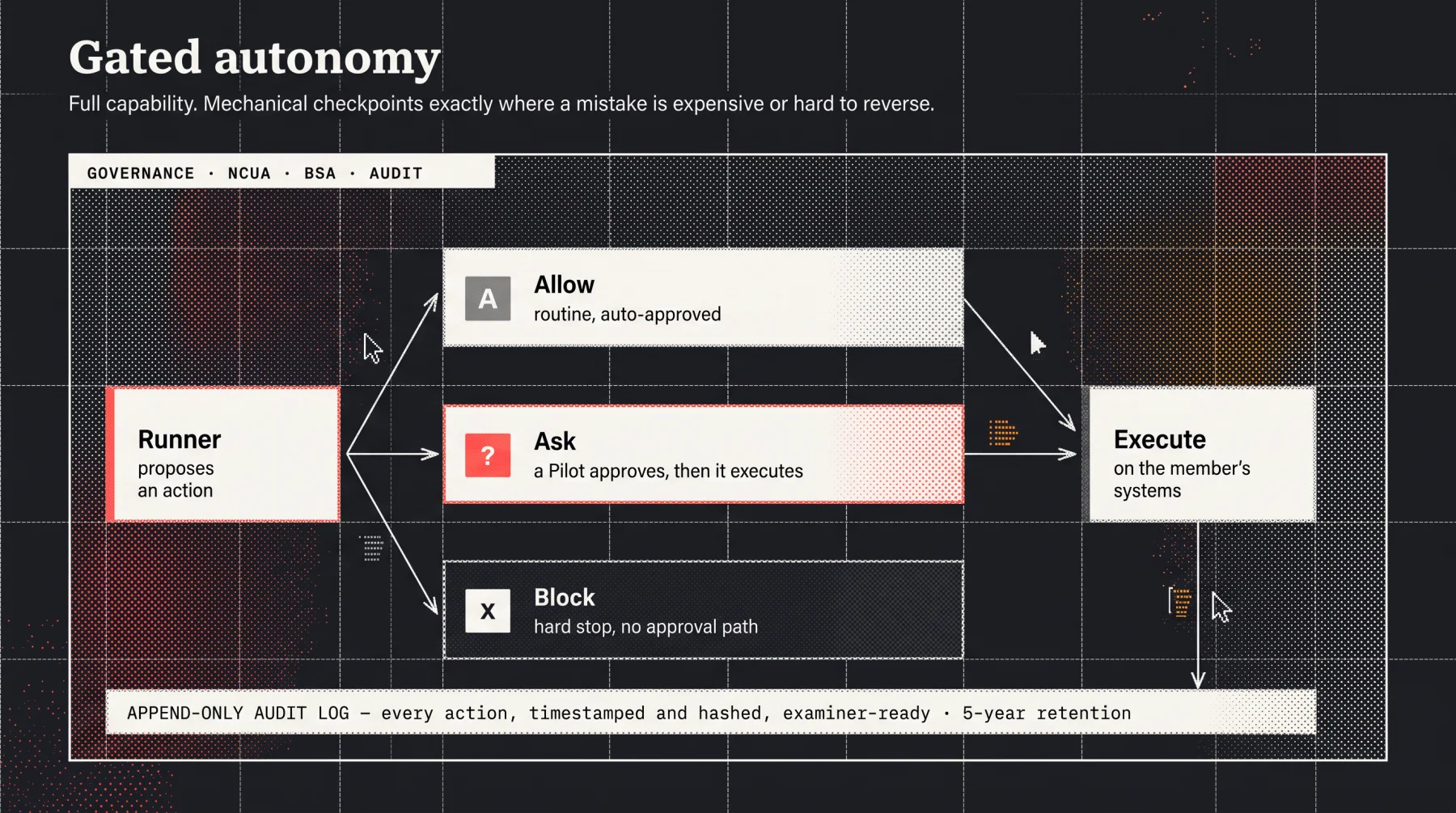
Governance-First
Full capability, checked at the exact points where a mistake is expensive.
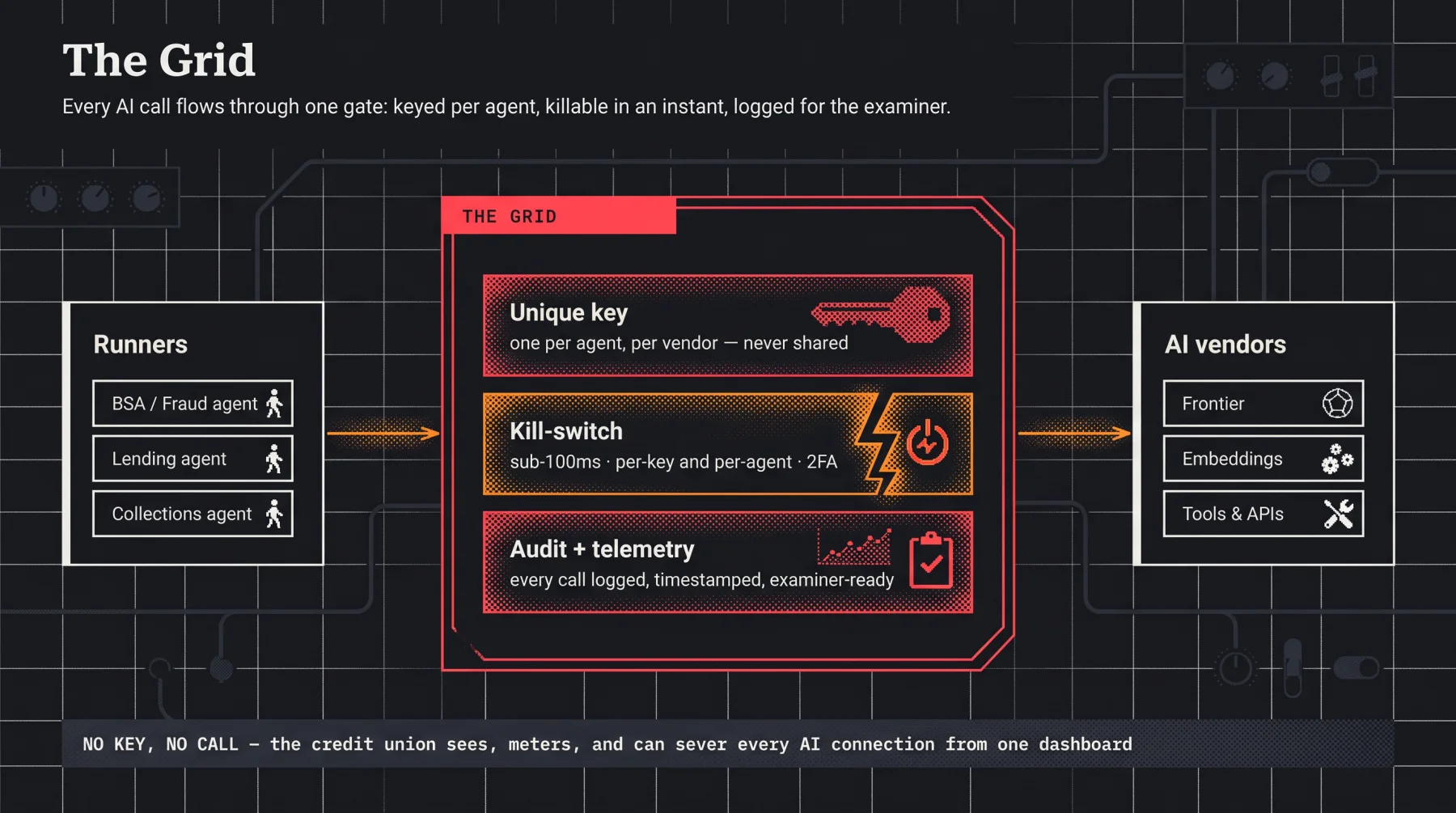
AI-Native Foundations
The four things the platform stands on: Data, Circuit, Agents, and Security.
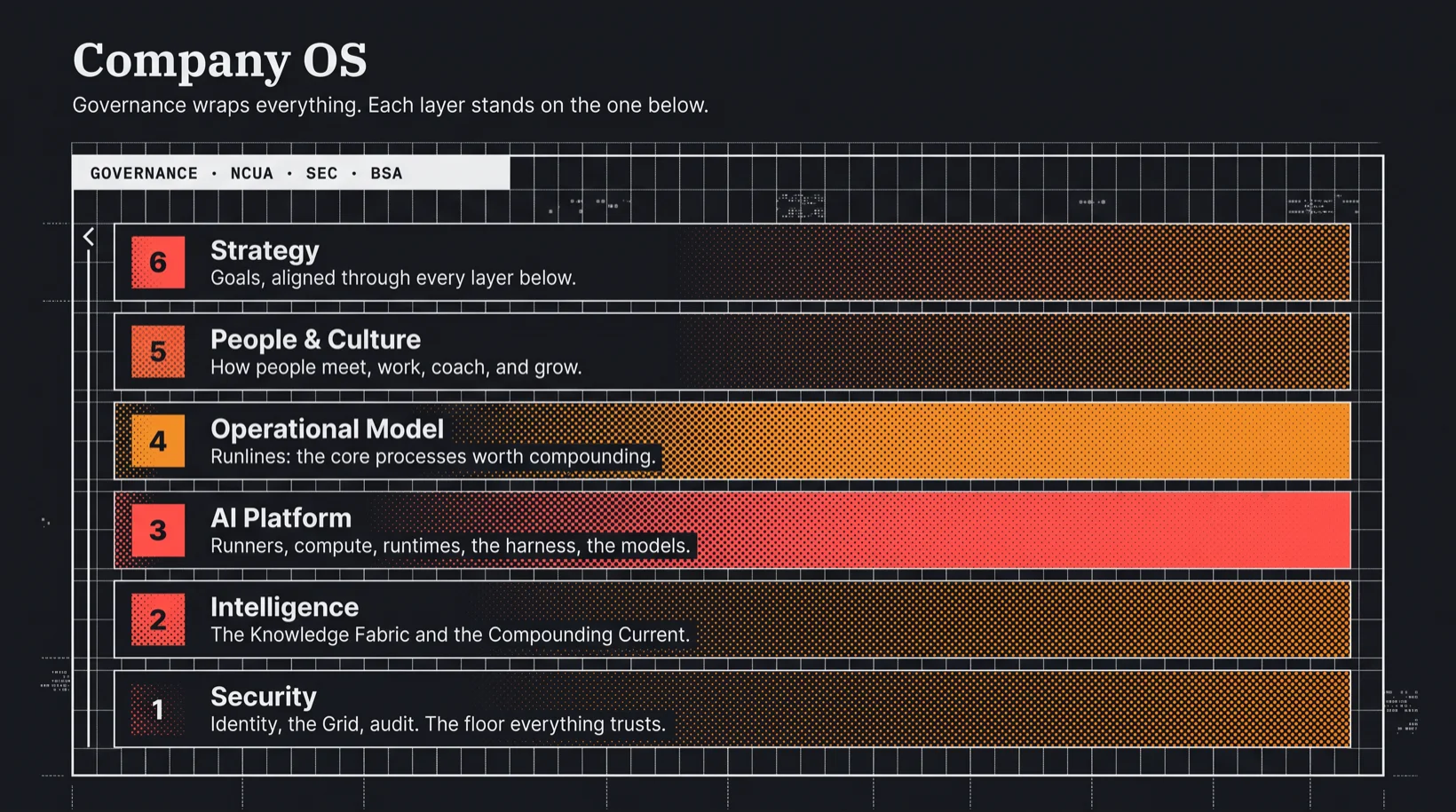
Company OS
What the Framework becomes once it runs a whole institution, layer by layer.
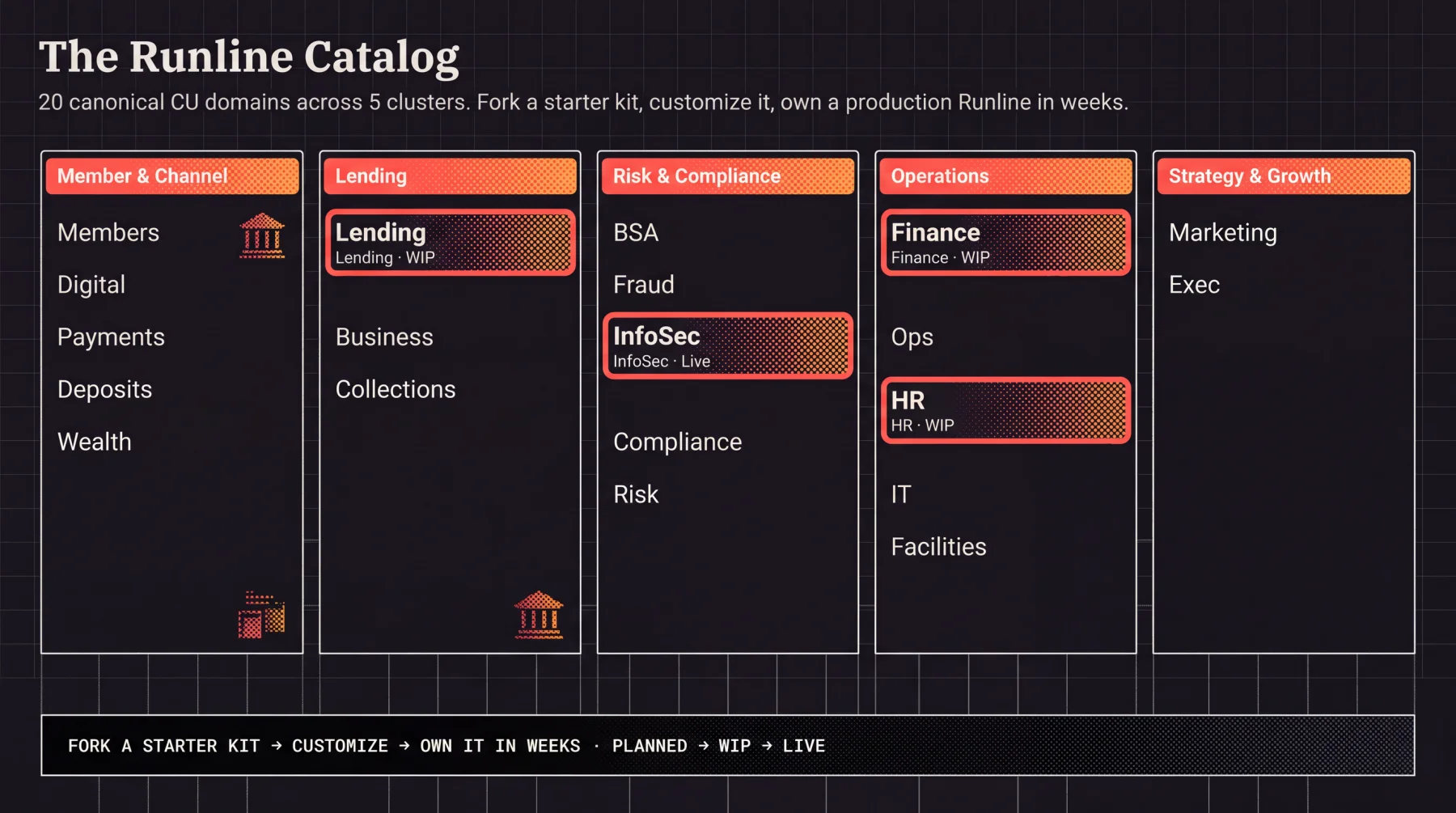
Runlines
The primitives, Items, Streams, and the 20-domain catalog across five clusters.
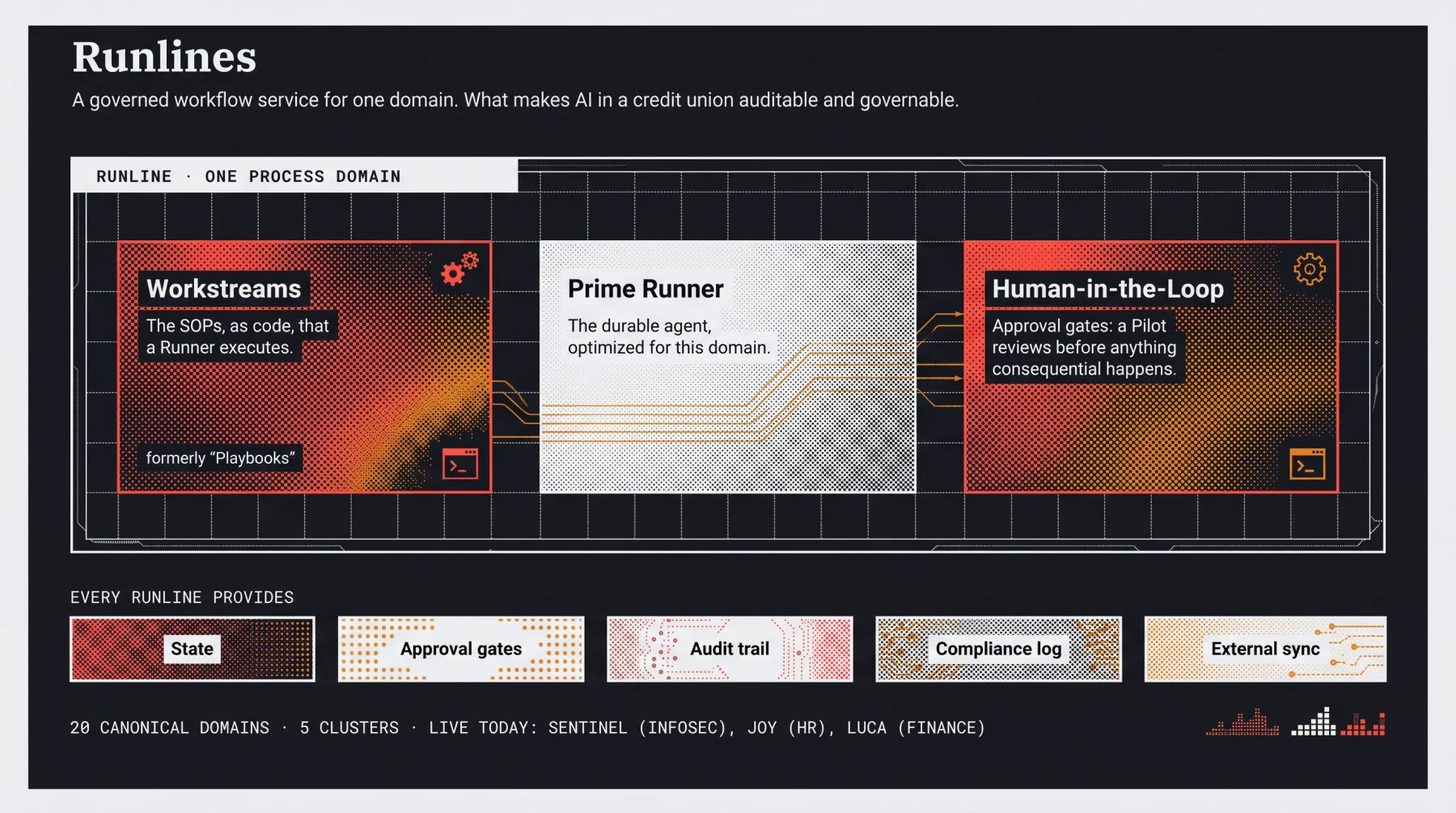
Platform & SDK
Identity, events, the harness, the API, and the private SDK the team builds on.
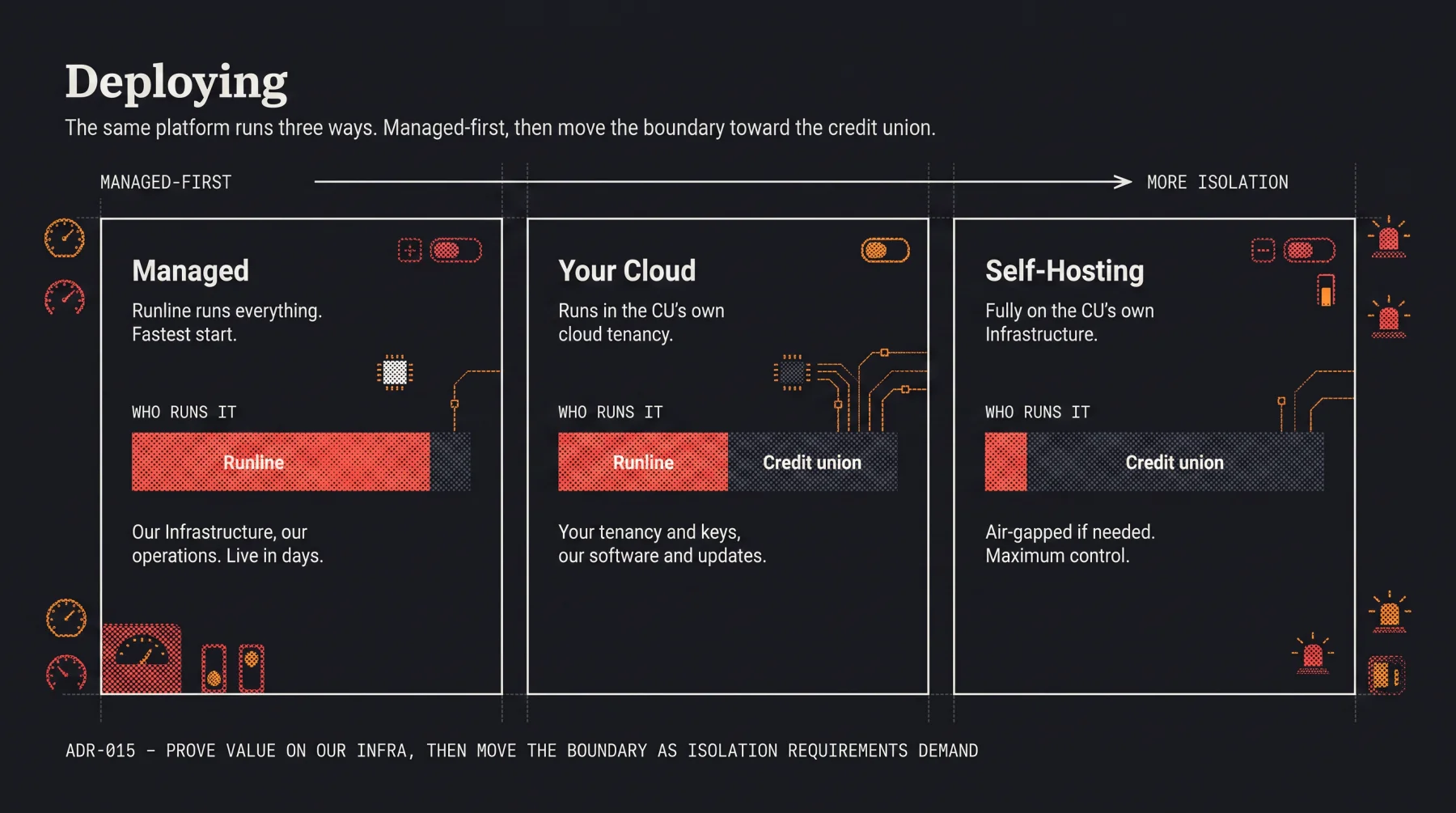
Deploying
The same platform, three ways: fully managed, your cloud, or self-hosted.
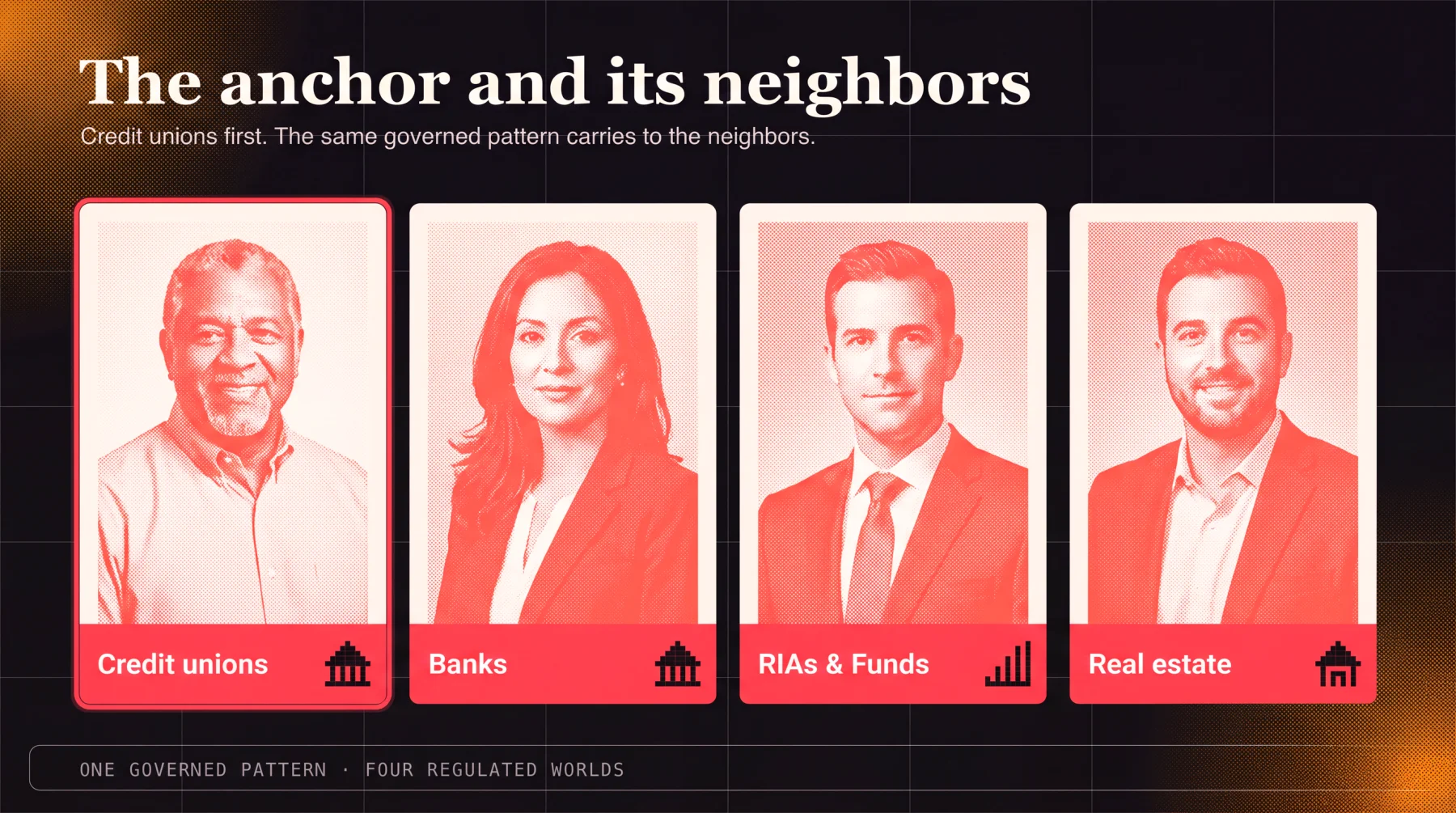
Who we serve
Credit unions are the anchor: NCUA-regulated, member-owned, and already outsourcing intelligence work, so the budget line and the vendor-swap path already exist. The same governed pattern carries to the neighbors.
- Credit unions
- Banks
- RIAs & Funds
- Real estate
For the team building it
The private SDK, the API, the harness, and the full lexicon. Everything needed to compose Runlines on the same primitives our own Runners run on.
The credit union, made executable.
Same people, same members, one governed stack, and far faster information.